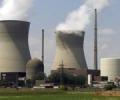
Emerging as the single largest export zone in the country, the Jamnagar SEZ has seen its export nearly touch Rs 80,000 crore (Rs 800 billion) till March 2010.

Reliance Industries Ltd will begin full-fledged petrol and diesel retailing by June this year after it sets up 300 petrol stations across the country.
An analysis of buy and sell transactions by mutual funds during May shows that the fund houses purchased stocks from sectors like power, software, housing finance and sugar, while offloading shares from banking, refineries and airlines. According to brokerage firm Sharekhan, state-run NTPC, ONGC, TCS, Essar Oil and Reliance Petroleum figure among the favourite picks by the equity funds in the month of May.
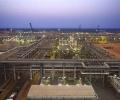
Ambani's Reliance has refineries at Jamnagar in Gujarat.

Oil ministry this week issued written instructions to the billionaire Mukesh Ambani-run firm to make a 'pro-rata' cut in gas supplies to all existing customers if the production from its KG-D6 field cannot support new customers, two sources with direct knowledge of the information have said.
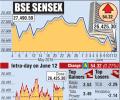
Oil, banks eneded the day in green while few in auto sector lost heavily.

Indian Oil Corporation (IOC) and two other public sector oil firms will install 22,000 electric vehicle (EV) charging stations over the next 3-5 years to support the nation's target to reduce its carbon intensity and reach net zero emissions by 2070. IOC, the country's largest state-controlled refiner by capacity, will set up EV charging facilities at 10,000 fuel outlets over the next three years, chairman Shrikant Madhav Vaidya said. Bharat Petroleum Corporation Ltd (BPCL) said it will set up 7,000 stations over the next five years while Hindustan Petroleum Corporation Ltd (HPCL) has plans for 5,000 stations.
After successfully dabbling in organised retail in 2006, Mukesh Ambani, chairman of India's largest private sector company, Reliance Industries (RIL), has now set his eyes on no-frills, low-cost housing."RIL has deep pockets and excellent execution skills. It has executed two large projects like the Jamnagar refinery and the KG-D6 basin in a record time. Another such large project is only obvious for the company to get into," said a source close to the development.

Mangalore Refinery and Petrochemicals Ltd (MRPL) will double offtake of crude oil from Cairn India's Rajasthan fields to 0.4 million tons this fiscal.

RIL has sent a draft GSPA to Essar Oil and the contract may be inked within the next few days.

Around 75 per cent, or 372 stocks, that are part of the BSE500 are trading at least 10 per cent below their all-time high levels, despite the index hitting a record high 20,515 points on the BSE in intra-day trade on Wednesday, surpassing its previous high of 20,390 touched in March 12. The index, which accounts for 93 per cent of BSE listed companies' market capitalisation, has gained 8 per cent from its recent low of 18,983, touched on April 19. In comparison, the benchmark S&P BSE Sensex gained 6 per cent over the same period, but is still nearly 4.5 per cent away from its all-time high of 52,517 that it hit on February 16.

RIL's profit before interest and depreciation increased by 8%.

Reliance Industries has since April stopped selling gasoline and gas oil to Iran in an apparent bid to escape sanctions by the US, where it is eyeing an acquisition.
RIL has been using gas from GAIL during the past three months to test-fire the 1,440-km east-west pipeline, India's longest, from Kakinada in Andhra Pradesh to Bharuch in Gujarat. Only 100 km of the pipeline remains to be test-fired. It will transport gas from the world's largest gas discovery at the Krishna-Godavari basin in the Bay of Bengal to Jamnagar in Gujarat, where it has set up the world's largest petroleum refinery.

Indian companies place orders worth $600 million for US crude, which is likely to increase by nearly $2 billion in the near future.
The government is unlikely to ban export of petroleum products or review the export-oriented status of Reliance Industries Jamnagar refinery, as has been demanded by United Progressive Alliance government's new ally, the Samajwadi Party.
Reliance Industries has posted good growth in Q1 of the current financial year.

Reliance had shut its 1,432 filling stations in March 2008 after sales dropped to almost nil as it could not match the subsidised price.
"With RIL commissioning its second refinery last December, the total capacity of the (Jamnagar) complex will go up to 1.24 million barrels a day, exposing it to international vagaries. By surrendering the EOU status of one refinery and maintaining that of the other, the company will be able to hedge its risks," said an industry veteran. EOU status for RIL's second refinery currently ends in March 2010.

RIL is keen on buying Cairn India's Rajasthan crude oil but said it cannot take the oil unless the pipeline from fields to Gujarat coast is built.
A day after Reliance Industries chairman Mukesh Ambani met Prime Minister Manmohan Singh to forestall political attempts to throttle his oil refinery business, the petroleum ministry has come out with a detailed presentation to show that the demand for the windfall profits tax (WPT) on private oil companies is 'short-sighted populism' and 'bad economics.'
The government on Thursday allowed free inter-state wheeling of renewable energy used in the production of green hydrogen and ammonia as it seeks to boost usage of the carbon-free fuel and make India an export hub. Unveiling the first part of the much-awaited National Hydrogen Policy, Power and New and Renewable Energy Minister Raj Kumar Singh said the government is targeting production of 5 million tonnes of green hydrogen by 2030. Oil refineries to steel plants require hydrogen to produce finished products.

An appreciating rupee, unabated buying by domestic institutional investors (DIIs) and encouraging earnings by blue-chips contributed to the uptrend
The proposed chemical plant will use 2,50,000 tons of naphtha produced by IOC's Barauni refinery and the natural gas that GAIL plans to bring from eastern offshore and imported LNG through the planned Jagdishpur-Haldia pipeline. The two firms by the fiscal year would prepare a techno-economic feasibility study for the unit that would take up to five years for construction.
While leading SEZs like Mahindra World, Nokia, Apache, Hyderabad Gems and Jewellery became operational in 2008-09, exports from these zones fell short of target of Rs 1,20,000 crore (Rs 1,200 billion) in the last fiscal, according to the Export Promotion Council for EOUs and SEZs.
Two weeks ago, RIL chief Mukesh Ambani instructed his senior executives to get ready for production by October, almost two-three months ahead of the earlier planned schedule, as the refinery at Jamnagar, the East-West pipeline and facilities at KG basin are nearing completion, said sources. RIL is developing the largest gas find in the world in KG basin, with estimated gas reserves of 11.5 trillion cubic feet (TCF).
RIL is talking to consumers of gasoline (petrol) as well as US fuel marketers who currently have a deficit, he said but did not give details. The company recently started gasoline trading operations in the US. Its office located in Houston would trade in gasoline both on the US Gulf Coast and New York Harbor market.

India, the world's fourth-biggest oil consumer, recently offered Saudi Aramco a stake in refineries and petrochemical projects.
The commerce ministry has proposed a three-year extension of tax benefits given to Export-oriented Units in an attempt to encourage export industries at a time when global demand is expected to slump further.

The country's most valued company Reliance Industries on Thursday reported 6.41 per cent drop in its stand-alone profit at Rs 3,852 crore (Rs 38.52 billion) for the second quarter of the current fiscal.The total income rose 5.88 per cent to Rs 47,476 crore (Rs 474.76 billion) during the quarter from Rs 44,839 crore (Rs 448.39 billion) in the corresponding period a year ago, RIL said in a filing to the Bombay Stock Exchange.
The creation of the Nano ranks with major pioneering attempts in manufacturing. It is thus fair to say that Ratan Tata has written himself into the history books.

Stocks of Indian companies with exposure to Europe fell on Tuesday amid concerns about the impact on their sales in case the Russia-Ukraine crisis worsens and the US and its allies impose economic sanctions on Russia. While top conglomerates, including Reliance Industries, the Tata group, and Aditya Birla Group, said they did not have any significant exposure to Russia, executives of some of the oil and gas, pharmaceutical, and tea companies said they were monitoring the situation closely as they earned substantial income from the region. Russian President Vladimir Putin on Monday ordered troops into two breakaway regions of eastern Ukraine after announcing that Russia would recognise their independence.
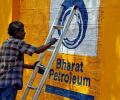
Though the NDA government had been trying to privatise 20 companies, a decision for which was taken in 2017, and included national carrier Air India, the investor community evinced little enthusiasm for any of them. Now, with an in-principle approval for privatisation of BPCL, CCI and SCI, the government has taken the plunge again.
The domestic supply of diesel has been constrained on rapidly growing demand. The diversion of supplies from Reliance Industries, which was given export-oriented unit status last year, has added to the shortage. Reliance produces 10 million tonnes of diesel from Jamnagar.
According to senior RIL executives, more than half the work has been completed on the pipeline, which will transport gas from the KG basin to the RIL refinery at Jamnagar.
The government on Friday formally cleared Reliance Industries' Rs 16,000 crore (Rs 160 billion) petrochemical special economic zone, which would come up near the company's Jamnagar refinery.
Reliance Industries on Monday clarified that the company made purchases from Iraqi crude oil suppliers at the then prevailing international prices and no other payments were involved in these purchases.
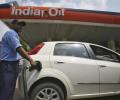
Diesel makes up nearly half of fuel demand in Asia's No 3 economy.
